Is Hungryroot Worth It for Families? Here’s My Take After Trying It
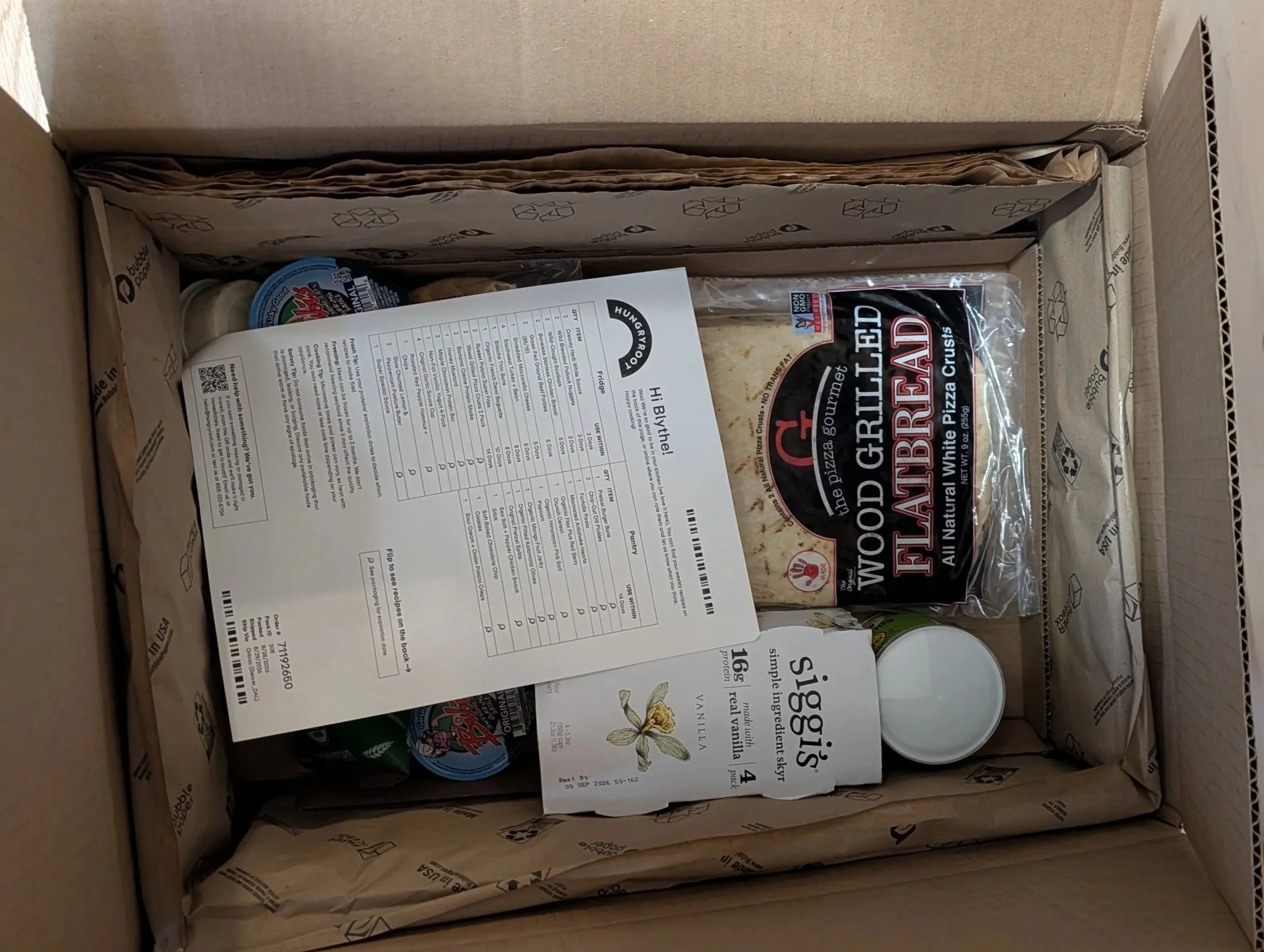
Hungryroot subscription box.
Disclosure: Hungryroot provided this box for free. All opinions are my own.
Recently, I had the chance to try a free week of Hungryroot’s grocery delivery service. As a busy mom, I’m always looking for ways to make weeknight dinners easier.
I tend to make the same meals on repeat, so the idea of new recipes delivered to my door was appealing. But meal subscription boxes have never fully replaced grocery shopping for our family. We still need staples, which can make a box feel like an added expense rather than a true substitute.
This time, I went in with a different expectation: I didn’t need Hungryroot to replace the grocery store. I wanted to see whether it could make a few weeknight dinners easier.
What I Liked
It Was Easy to Find Family-Friendly Meals
Hungryroot made it easy to prioritize recipes based on our family’s preferences. I chose options like fish nuggets, flatbreads, and pasta dishes, including scallop and brown butter farfalle.
The variety was enough that I could find meals that felt approachable for kids without choosing the same basic dinners we already make at home.
The Ingredients Felt High Quality
I appreciated the quality of many of the ingredients we received. The meat and seafood in our box included grass-fed and wild-caught options, and many of the dairy and snack products were organic or non-GMO.
Those are qualities I already look for when grocery shopping, so I liked not feeling like I was sacrificing ingredient preferences for convenience.
The Meals Were Actually Easy
Every meal I chose included at least some prepared components, which kept prep time low.
For example, we made flatbread pizzas using packaged crusts, and fish nuggets with fries that could go straight into the oven or air fryer. The recipes were straightforward, and I rarely spent more than a few minutes actively prepping dinner.
That was probably Hungryroot’s biggest advantage for me.
It Got Us Out of a Recipe Rut
One of my favorite parts of the service was the variety.
We tend to rotate through the same weeknight meals, and Hungryroot gave us an easy way to try something different without searching for recipes, making a long ingredient list, or planning everything myself.
The printed recipe cards also made it easy to save meals we liked and recreate them later.
What I Liked Less
The Snack Portions Didn’t Work Well for Our Family
Hungryroot positions itself as more than a meal kit, with groceries and snacks available alongside recipes.
For our family, though, that part was less useful. Individual snack items or smaller quantities don’t go very far in a house with kids, and I would still need to buy most of our usual snacks and staples separately.
That made the service feel more like a meal solution than a true grocery replacement.
The Price Would Be Hard to Justify Every Week
Convenience comes at a premium.
My box would have cost $269.12 without the free trial. For that price, I would still need to shop for basics like milk, eggs, yogurt, cereal, produce, and snacks.
That’s where Hungryroot became harder for me to justify as a weekly expense.
I could see the value during an especially busy week, after travel, or during a stretch when meal planning feels overwhelming. But as an ongoing subscription, the cost would be difficult for our family to absorb on top of our regular grocery spending.
The Family Take
Worth it occasionally, but probably not every week for us.
Hungryroot made weeknight dinners easier, gave us new recipes to try, and saved me time on meal planning and prep.
But at nearly $270 for our box, it didn’t replace enough of our regular grocery shopping to feel like a good long-term value.
For our family, I’d be more likely to use Hungryroot during particularly busy weeks than keep it as a permanent weekly subscription.